Loading...
Buying Guide8 min read
How to choose an IT moving company in Alberta
The selection is decided by the scope-of-work document, not by the price on the last page of it.
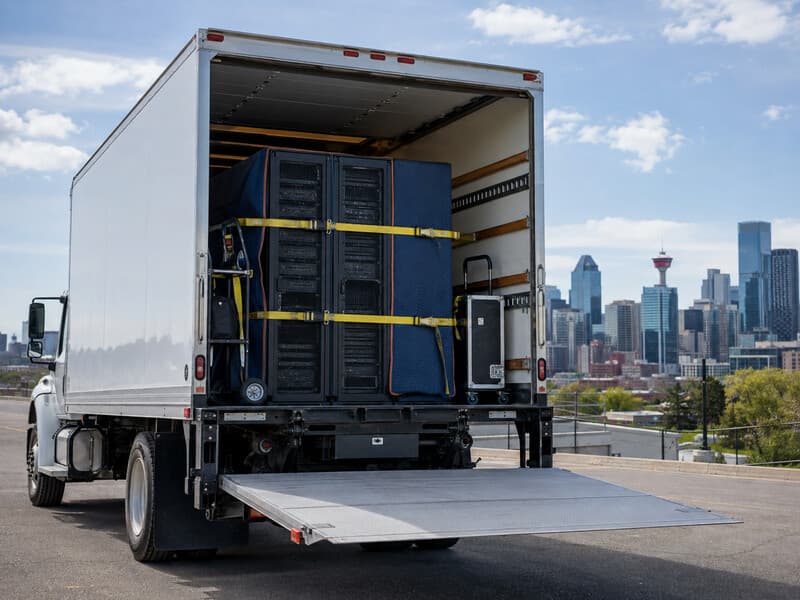
Three quotes for the same IT move can differ by a factor of four, and the reason is almost never the truck. It is what each vendor has agreed to be responsible for. This is how to read the difference, what to ask before you shortlist, and where the procurement risk actually sits.
Why a general moving company is the wrong tool
A commercial moving crew is genuinely good at what it does: volume, protection of finishes, floor plans, and getting a building emptied on schedule. None of those skills apply to the part of an IT move that goes wrong. The gaps are specific.
- The connections are the asset. Moving a rack is easy. Reproducing several hundred documented connections at the far end is the job, and a general mover does not produce that record because it is not part of their trade.
- Handling tolerances are different. Shock, static and orientation matter to spinning disks, rail-mounted chassis and optics in a way they do not matter to a filing cabinet. Blanket-wrap-and-strap is the wrong protocol.
- Nobody can shut it down or bring it back. A move crew cannot perform a graceful shutdown sequence, and cannot validate anything at the destination. If your vendor stops at the loading dock, your own team is on the hook for the highest-risk hours.
- Goods-in-transit cover is priced for furniture. Standard commercial moving liability is often calculated by weight. A blade chassis weighs very little and costs a great deal.
None of this means you need two vendors. It means the IT scope has to be owned by someone who does IT relocation as their trade, whether they subcontract the furniture or you run the office relocation under the same project.
Stage 1 — The qualifying questions
Ask these before you send a floor plan. The answers separate vendors faster than a site visit does.
Questions about method
- How do you capture and record the existing connections, and what format do I receive that record in? A vendor whose answer is “we take photos” is describing evidence, not port mapping.
- Who performs the graceful shutdown and the power-on sequence — your people, mine, or a shared runbook we write together?
- What is your validation step, and what does the pass condition look like in writing?
- How do you handle a unit that does not come back after the power cycle? Whose problem is it at 03:00?
- What is your rollback trigger, and who is authorised to call it?
Questions about people
- Are the crew employees or day labour hired for the weekend? Ask directly. It changes the training assumption entirely.
- Do I get one project manager who owns the whole move, and are they on site during the window or reachable from home?
- Who has been security-screened, and to what standard? A regulated client will ask you this, so ask it first.
- What happens to the schedule if the crew you have quoted is on another job that overruns?
Questions about the destination
- Will you inspect the destination before the window — power, cooling, rack availability, uplinks, loading access — and put the findings in writing?
- Who books the freight elevators, the dock and after-hours building access at both ends?
- If the destination is not ready on the night, what is the documented contingency and who bears the cost of it?
Stage 2 — Insurance and chain of custody
Reading the certificate of insurance properly
Ask for the certificate, not a statement that they are insured. Then read four things on it. First, the coverage type: commercial general liability protects against damage they cause to premises and third parties, and is not the same thing as cover for your equipment while it is in their hands. Second, the goods-in-transit or bailee limit, which is the number that matters, and whether it is per occurrence or aggregate. Third, whether that limit is calculated by declared value or by weight. Fourth, the exclusions — electronic data, consequential loss and business interruption are usually excluded, which means the policy may replace a chassis but will never cover the revenue lost while it was down.
Compare the transit limit against the replacement value of the single most valuable item in the move, not against the total. Confirm WCB coverage in Alberta is current, and confirm whether subcontracted labour is covered by the same policies or by their own.
What chain of custody means in practice
Chain of custody is a documented answer to the question “who had this asset, and when” for every hour between the source rack and the destination rack. It is not a promise of care; it is a set of records. A vendor who runs it properly can produce:
- An asset manifest by serial number, signed out at the source and signed in at the destination, with the discrepancies noted rather than quietly resolved.
- Named handlers per stage, so a missing unit has a shortlist rather than a mystery.
- Vehicle control: sealed or locked transport, no overnight stops in an unsecured yard, and a stated rule about whether the vehicle is ever left unattended.
- A separate, tighter procedure for anything containing data that is being retired rather than moved, ending in a certificate of data destruction per asset.
If your organisation is regulated, this documentation is the artefact your auditor will ask for. Confirm at quote stage that it is produced as a matter of course rather than on request.
Stage 3 — What a real scope-of-work document contains
This is where quotes stop being comparable. A one-page price with a crew size and an hourly rate is not a scope of work. A usable one states, in writing:
- An asset list at the level of individual units, with weights, dimensions and rack positions, produced from a site walkthrough rather than from your email.
- A boundary of responsibility. Precisely where the vendor’s work stops and yours starts, per stage. Most disputes after a move trace back to a sentence that was never written.
- A timed sequence for the window: arrival, shutdown, de-rack, load, transit, re-rack, re-cable, power-on, validation, handover, each with a duration and a dependency.
- Named deliverables and when you receive them: the port map, the asset manifest, the destination rack elevations, the validation results, the certificates.
- Assumptions and exclusions stated explicitly — that the destination will be powered and cooled, that elevators are booked, that your application owners are available for testing. Read this section first; it is where the price is really set.
- A change mechanism. What happens to cost and schedule when scope moves, and who signs it off.
- Acceptance criteria. The definition of done, agreed before the work rather than negotiated after it.
The IT relocation checklist is a reasonable structure to hold a proposal against: if a vendor cannot say who owns each line, that line is unowned.
Stage 4 — Red flags
- A firm price without a walkthrough. Nobody can scope a server room from a description. That number will be revised, and the revision will arrive when you have no alternative.
- No written method. If the process only exists in a salesperson’s explanation, the crew on the night is working from memory.
- Reluctance to name the crew model. Vagueness about whether the people on site are employees is a meaningful answer.
- Certificates “available on request” that never arrive. Insurance, WCB and any claimed accreditation should be produced within a day.
- Pressure on the schedule. A vendor pushing you to book before the dependency mapping is finished is optimising their calendar, not your outage.
- No validation in scope. A proposal that ends at “equipment installed” has moved the risk onto your team without pricing it.
- References that cannot be contacted. Logos on a website are not references. Ask to speak to somebody who ran a comparable move.
Stage 5 — Comparing quotes that are not comparable
Normalise before you compare. Build a single table with one row per deliverable — walkthrough, dependency map, port map, labelling, shutdown, transport, re-rack, re-cable, validation, documentation, disposal of retired assets, post-move support — and mark each vendor as in scope, excluded, or unstated. Unstated is the important column. Then price the gaps at what it would cost you to cover them with your own staff at overtime, and add that to their number.
A cheaper quote that excludes port mapping and validation is usually the more expensive option once the internal hours are counted, and it carries the outage risk as well. The right comparison is not price against price. It is total cost of the window, including the hours your own team will spend and the exposure if it overruns.
Before you sign
Confirm the named project manager. Confirm the deliverable list and the dates you receive each item. Confirm the acceptance criteria. Confirm the change mechanism and the rollback trigger. Get the certificate of insurance on file. Then agree the window with the business in writing, with the recovery tiers attached, so that the decisions that shorten an outage have already been made before anyone arrives on site.
Comparing proposals for an Alberta move?
Caliber has relocated infrastructure for Suncor Energy, TransAlta, the Alberta Energy Regulator, Keyera and Rogers Data Centres. Every engagement starts with a walkthrough and a written scope of work.